
Commercial kitchen fabrication,
drawn before it is cut.
A kitchen is not a set of parts, it is a route that food takes through a room. We build the stainless that route runs on, from the delivery door to the dish pit, for restaurants, schools, hospitals, hotels and institutional kitchens across Massachusetts and Rhode Island.
What we build for a kitchen
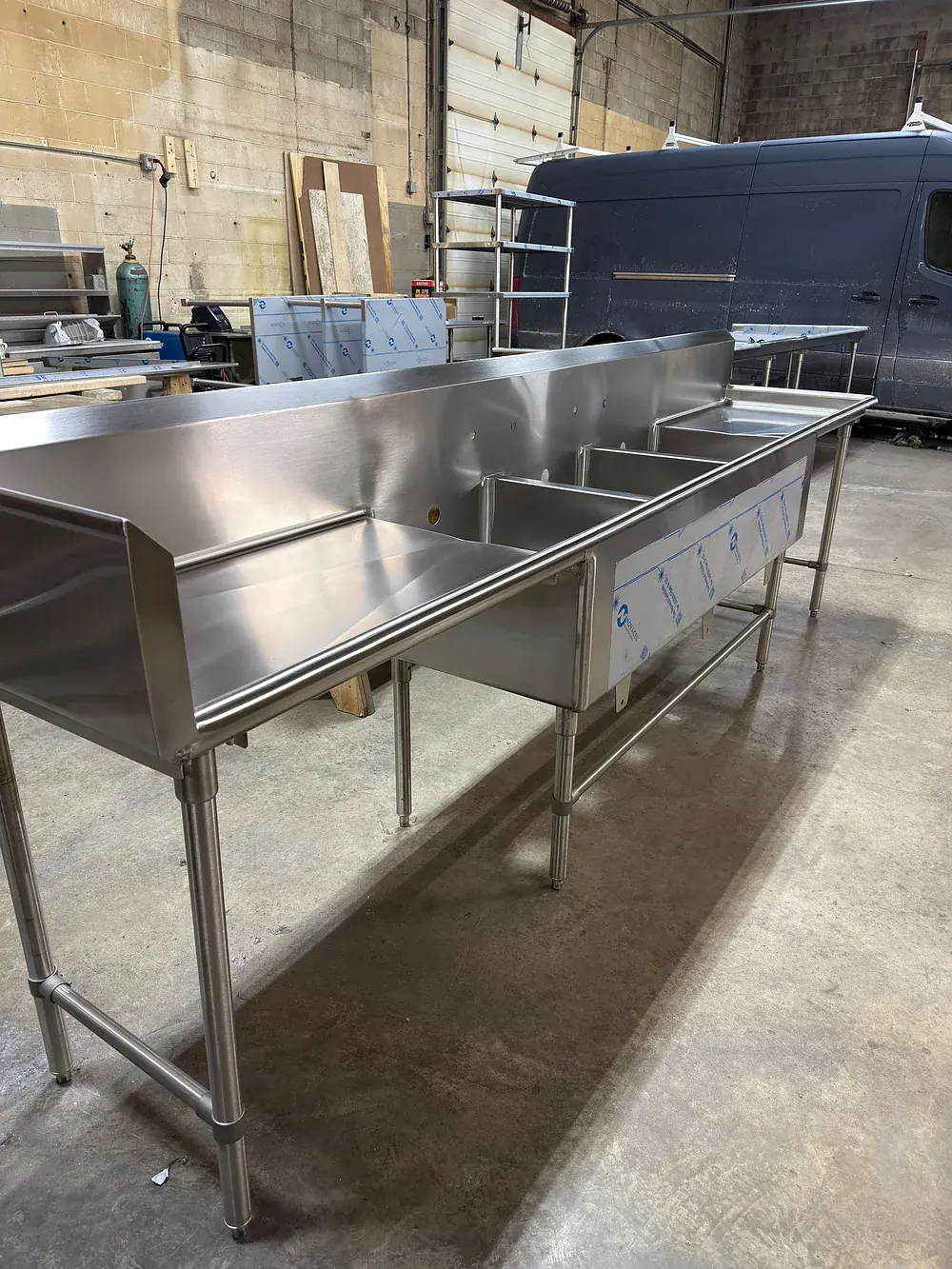
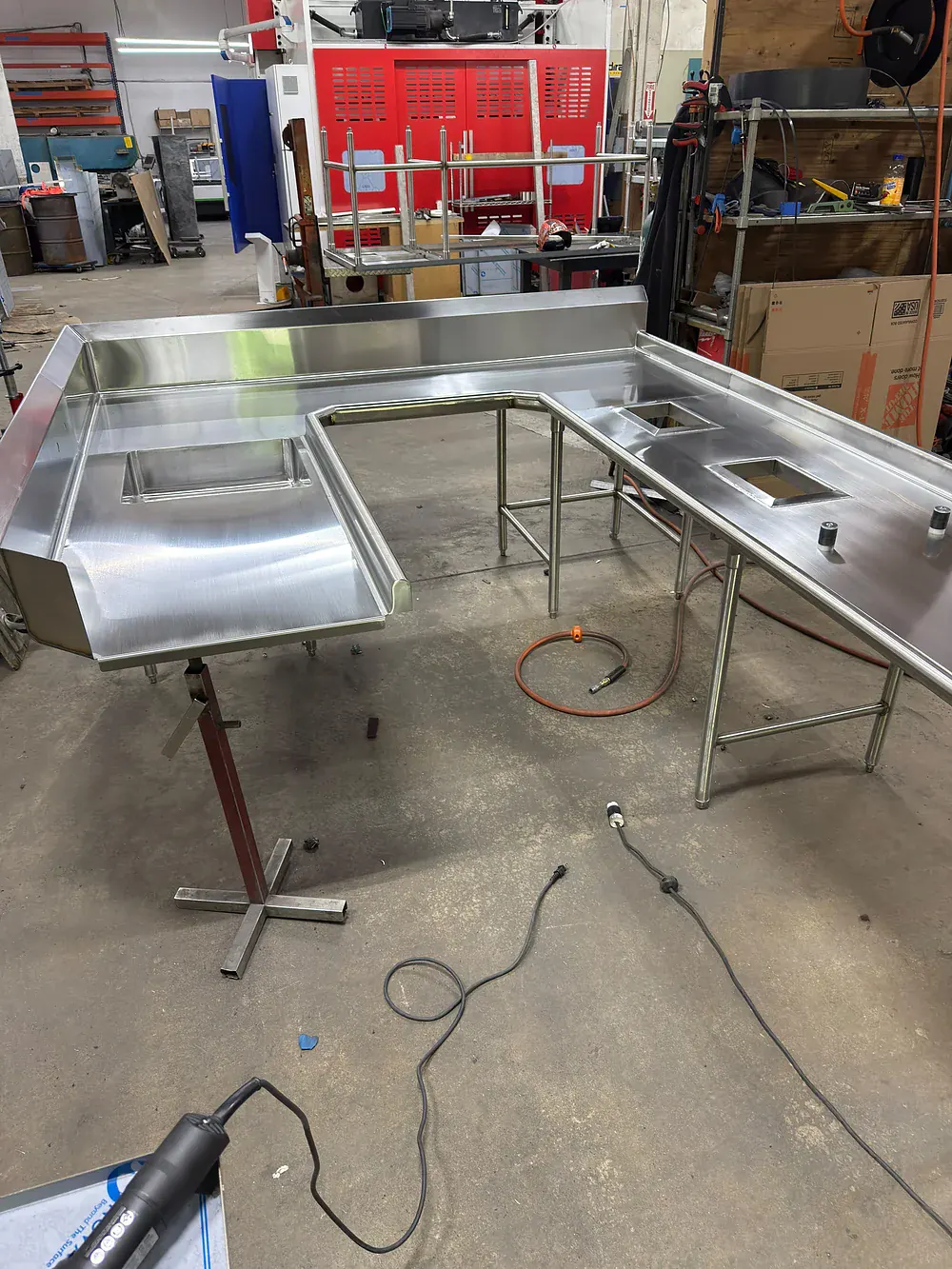
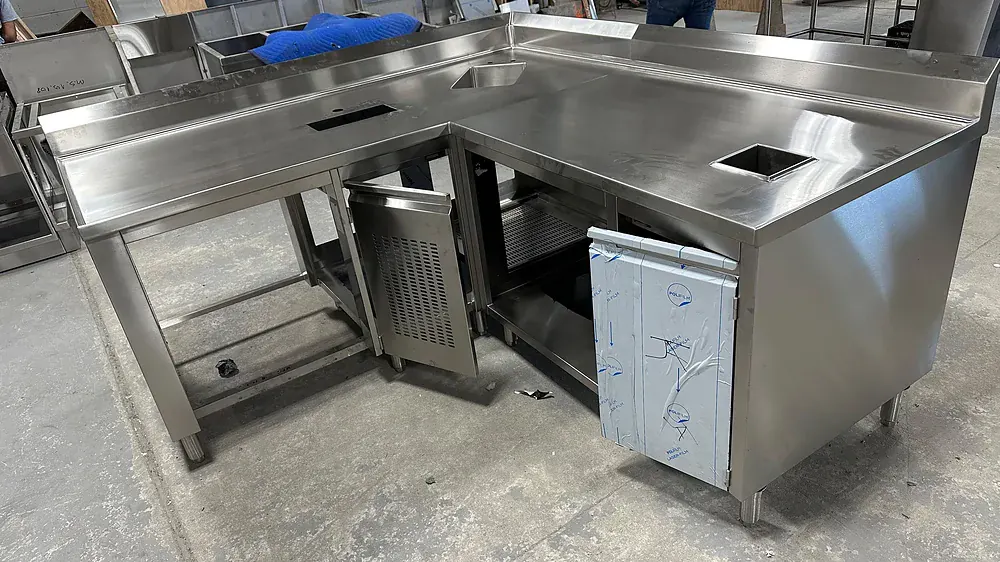
Three compartment sinks with integral drainboards. Dish tables with scrap chutes and sloped decks, straight or in a U around the machine. Prep counters with rear turn-ups. Chef bases and counters that close on refrigerated equipment we did not build. Equipment stands with ventilated bases. Wall shelving, undershelves, backsplashes and the filler pieces that make an equipment package actually fit the room it was ordered for.
How the piece is specified
For food contact work the industry default is Type 304 sheet, and 16 gauge is the usual call on decks and tops that carry weight, lighter on skirts and panels that do not. The grade and the gauge for your job get confirmed against what the room and the code ask for, and they go on the drawing before anything is cut. Inside corners are coved to a radius a brush can reach, not folded and caulked. Welds on food contact surfaces are ground back and blended, so the joint is a surface and not a seam.
When the drawing calls for something else, we say so before the metal is cut. Specifying up costs money the operation does not get back, and specifying down fails the first inspection. Part of the job is telling you what you do not need to buy.
Two measurements, not one
The first field measure happens when we quote. The second happens after the walls close, because a room in drywall is not the same room that was on the plan set. The dimension that reaches the bench is the second one. That is the whole reason our pieces drop in on the first visit instead of going back to the shop for a trim.
The part nobody asks about until delivery day
Door width, stair turns and elevator depth get checked against the piece before it is cut, not on the sidewalk with a truck double parked. A long sink run that cannot make the turn into the basement kitchen is a fabrication problem, and it is our problem, so we solve it on the drawing.
“Equipment delivered on the right date and with a fine finish”Jose · Google review
What we need to quote it
You do not need a finished drawing to get an answer. Any one of these three is enough to start:
A plan set.
A sketch on paper.
A photo of the piece that failed.
The contact form takes PDF, DXF, DWG and photos straight from your phone. Nothing else is needed to get a real answer back.
Send the plan set and the equipment schedule together, and the quote comes back drawn against your room instead of against a catalog.
Also in the shop
Questions we get
What should we know about your shop before hiring you?
The metal is cut, formed, welded and finished in our own shop, and the crew that builds your kitchen is the crew that installs it. Two field measures go into every job, one at the quote and one after the walls close, which is what puts the piece in on the first visit. C&S has been in operation since 2022, and the Google Business Profile is public: 5.0 across 13 reviews, written by the people who bought the work.
Do you work from an equipment schedule?
Yes. Send the schedule and the cut sheets and the cut outs come off them. The counter closes on the equipment you actually bought, without a filler strip improvised on site.
Can you match an existing run that was built by someone else?
Usually. We measure the existing piece, match height, edge and finish as closely as the material allows, and tell you up front where a visible difference will remain.
Do you install, or only fabricate?
The people who built the piece carry it in and set it. There is no separate install crew learning the job on delivery day.
What do you need to quote?
A plan set, a sketch on paper, or a photo of the piece that failed. PDF, DXF, DWG and phone photos all upload on the contact form.
Start a project
Send the drawing.
A plan set, a sketch on paper, or a photo of the piece that failed. Any of them is enough to start.
(857) 389-1886
csstainlessfabricator@gmail.com
Send your drawing